
How to Choose Shengze Fabrics: A Cost and Technical Guide for Purchasing Managers
How to choose Shengze fabrics? This article, from a purchasing manager's perspective, compares Shengze with domestic production areas like Keqiao, Guangdong, and Fujian, as well as overseas supply chains in Vietnam and Turkey, focusing on advantages in chemical fiber woven stock, small-batch quick response, and cost transparency.
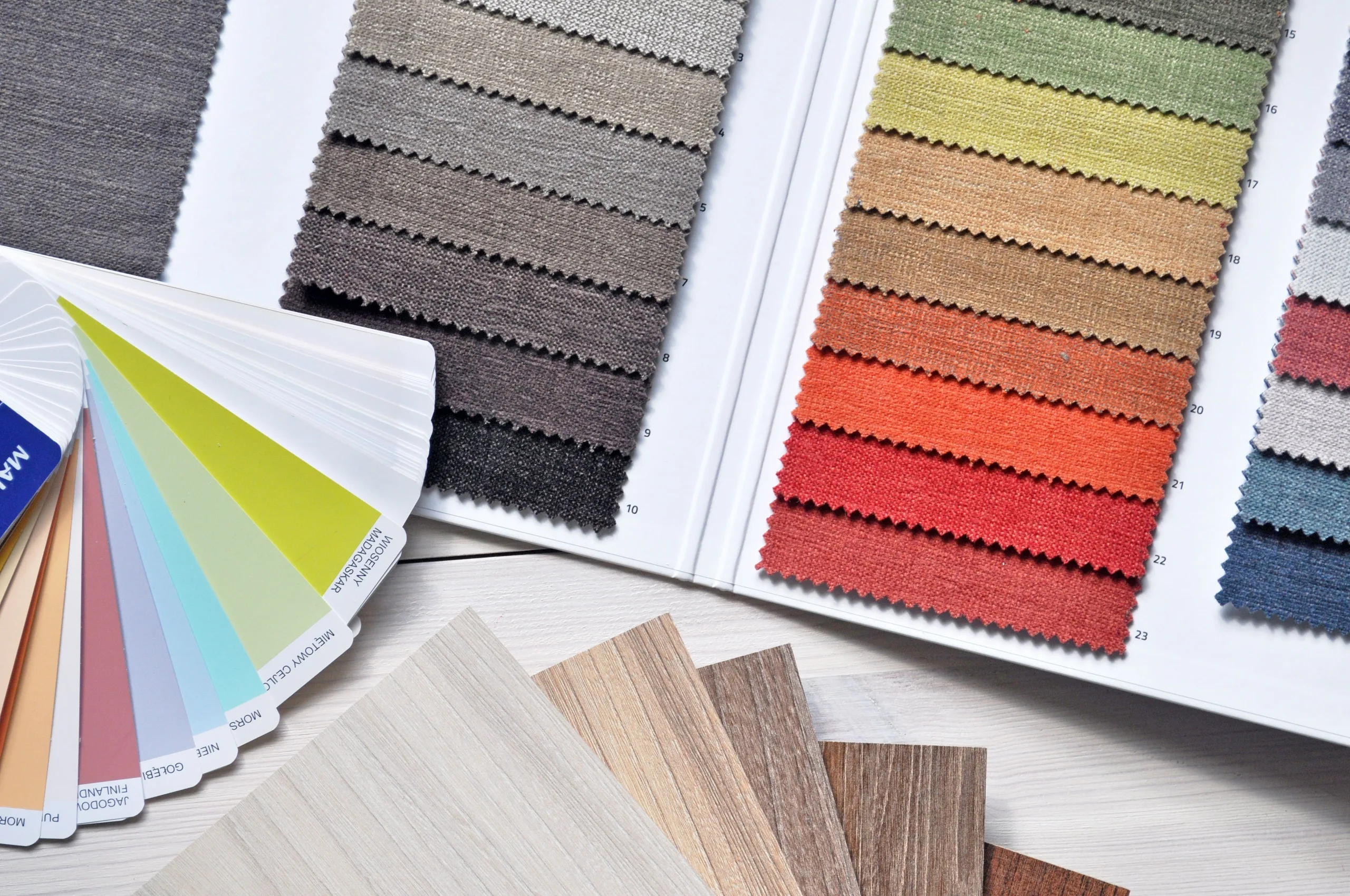
How to Choose Shengze Fabrics: A Cost and Technical Guide for Purchasing Managers
Written for people like you: you have orders in hand, deadlines to meet, unit prices to hold, and samples that need to pass on the first try.
This article doesn't talk about empty phrases like "China's textile industry is strong." It only discusses: what Shengze is good for, what other domestic regions are good for, where else you can source globally—and ultimately, where your money should go.
1. Before Purchasing, Ask the Right Questions
Many inquiries start with: "How much is your T800 twill?"
That question isn't wrong, but it's not enough. What really determines your bottom-line profit is often the following:
- Lead time: Can stock be shipped the same day? How many days for custom orders? Missing the shipping deadline makes a $0.30 per meter discount pointless.
- Roll-to-roll consistency and waste: Are weight, width, and color fastness stable? One rework costs more than the fabric price difference.
- Minimum order quantity (MOQ): A trial order of 200 meters and a full container of 20,000 meters require completely different supply chains.
- Documentation and communication: Can foreign trade documents, English spec sheets, and WhatsApp communication align? Southeast Asian customers are increasingly particular about this.
So, whether Shengze has advantages cannot be discussed without considering your product mix.
Shengze excels in chemical fiber stock, small-batch quick response, and price transparency; it does not excel in all categories.
Understanding this will prevent you from buying in the wrong place later.
2. Shengze: A Customer's Perspective on "Is It Worth Coming?"
Shengze, in Wujiang, Suzhou, is one of China's most typical chemical fiber fabric industry clusters. For overseas buyers, its value isn't in geographic talk like "close to the port," but in three things combined:
1. High Stock Density, Low Trial Order Cost
Shengze's market, surrounding warehouses, showrooms, and factories are all connected.
For casual pants, jackets, and shirt linings, common specs—polyester-spandex stretch, twill, waffle, check—many styles don't require starting from zero MOQ. Orders of a few hundred meters, or even dozens of meters for samples, can be accommodated.
This is especially critical for garment factories in Vietnam, Indonesia, and Cambodia:
Orders are fragmented; customers add colors today and change patterns tomorrow. A supplier that can provide small-batch stock is more useful than one that is 5% cheaper but has a 3,000-meter MOQ.
2. Mature Chemical Fiber Technical Path
Shengze started with polyester, nylon, and spandex blends, and decades of experience have accumulated in:
- Weaving and dyeing/finishing of stretch fabrics (weft stretch, warp stretch, four-way stretch)
- Functional chemical fibers like T800, memory fabrics, and cotton-like polyester
- Quick sampling of textured weaves like jacquard, honeycomb, and waffle
When you need "width 150, weight 240, density 149×172, controlled weft skew after washing," such conversations in Shengze have low communication costs with factories—you don't have to start by translating a fabric dictionary.
3. Clear Price Range, Easy Budget Anchoring
For the same polyester-spandex twill, Shengze's stock price often falls within a very narrow range.
Purchasing managers can use it as a price anchor: first calculate costs based on Shengze stock, then decide whether to pay more for "brand premium" or "special finishing" in other production areas.
This doesn't mean Shengze is always the cheapest; it means: its pricing system is transparent, suitable for foreign trade companies to do a quick feasibility check.
3. Shengze's Advantage Products: What to Buy Cost-Effectively, What Not to Force
Below are categories based on what customers often buy and where Shengze often wins. Not absolute, but enough for your first-round screening.
| Category | Shengze's Common Advantages | Purchasing Notes |
|---|---|---|
| Polyester-spandex stretch (twill, plain, waffle) | Full specs, ample stock, price-sensitive | Ask about spandex ratio, recovery, dye fastness |
| T800 / high-density polyester memory | Mature industry support | Distinguish true T800 from regular polyester; check weight and hand feel |
| Chemical fiber wool-like, suiting | High cost-performance, suitable for fast fashion and uniforms | Drape and wrinkle resistance must match target brand |
| Yarn-dyed, small jacquard, textured fabrics | Fast sampling, stock visible at showrooms | Control bulk color difference; keep shipping samples |
| Pongee, peach skin, taffeta linings | High volume, stable lead time | Mostly for linings; price-sensitive |
Where Shengze is relatively less advantageous (not impossible, but you may want to compare elsewhere):
- High-end pure cotton, long-staple cotton shirting → Look more at Shaoxing, Shandong, and Xinjiang cotton yarn systems
- Large-area knits, sweatshirt fleece, rib → Guangdong and Fujian knitting clusters are more suitable
- Heavy washed denim → Denim belts like Changzhou, Foshan, Xintang
- Ultra-luxurious silk, worsted wool → Hangzhou, Huzhou, or imported fabrics
In short: Shengze is the "default option" for chemical fiber stock and quick response; for natural fibers and knits, you need a separate sourcing line.
4. Domestic Comparison: If Buying in China, Why Not Elsewhere?
Customers often ask: "Isn't Shaoxing also in China? Isn't Guangdong also in China?"
Yes, but industry division of labor differs. Choosing the wrong production area means either overpaying or having your lead time ruined.
Shengze vs. Shaoxing Keqiao
- Keqiao: The world's largest textile distribution market, with the most complete categories—printing, home textiles, curtains, cotton, blends, everything. Suitable for buyers who "want to browse ten thousand showrooms for inspiration."
- Shengze: More focused on chemical fiber weaving and stock, with a smaller market radius; finding polyester and stretch fabrics is often more direct.
Customer decision tip: If orders are mixed and you need one-stop sourcing for fabrics and accessories → Keqiao; if orders are concentrated on polyester stretch and you need small-batch stock → Shengze is often faster.
Shengze vs. Guangdong (Foshan, Zhongshan, Shantou knitting belt)
- Guangdong excels in knits, garment supporting industries, and fast fashion, close to Guangzhou and Shenzhen ports, advantageous for cross-border e-commerce and fast fashion overstock.
- Shengze excels in woven chemical fibers, with price ranges and spec sheet language more aligned with traditional foreign trade and Southeast Asian factories.
Customer decision tip: If you make T-shirts, sweatshirts, or yoga wear → Guangdong; if you make casual pants, jackets, or woven uniforms → Shengze is more suitable.
Shengze vs. Fujian (Changle, Shishi, etc.)
- Fujian has strong knitting, warp knitting, and sports fabric chains, with advantages in nylon, swimwear, and sportswear.
- Shengze often offers more intuitive cost-performance in polyester woven, linings, and workwear.
Shengze vs. Changzhou/Foshan Denim Belt
- Denim depends on washing, enzyme washing, and finishing factory support; the production area logic is completely different from Shengze.
- Don't force "denim craftsmanship comparable to Turkey" in Shengze—it can be done, but it may not be the optimal solution.
In sales psychology, there's a "contrast effect":
If you place Shengze in the frame of "chemical fiber woven stock," it tends to appear strong;
If you put it in the frame of "all fabrics," its advantages become blurred.
Smart purchasers first define the category, then define the production area.
5. Global Comparison: Vietnam, Bangladesh, Turkey, South Korea... Where Should Your Money Go?
Southeast Asia (Vietnam, Cambodia, Indonesia)
- Advantages: Tariffs, labor, proximity to brands, and high garment export volume.
- Fabric reality: A large amount of woven chemical fiber and functional fabrics are still imported from China; local weaving is mainly supporting, with high-end specs and stock depth not matching Shengze.
- Customer perspective: Running a factory in Vietnam and continuing to source fabrics from Shengze/Keqiao in China is the norm, not a sign of "insufficient localization." The key is the total landed cost (fabric price + freight + tariffs + inventory capital occupation).
Bangladesh, India
- Advantages: Extremely low garment labor costs, concentrated large Western orders.
- Fabric reality: Local fabrics are mainly mid-to-low-end cotton; chemical fiber functional materials and quick-response stock still largely rely on China.
- Customer perspective: For million-piece cotton basics, deep localization is possible; for polyester stretch, T800, jacquard textures, China's supply chain still has an advantage.
Turkey
- Advantages: Close to Europe, strong in denim, knits, and some mid-to-high-end design, with geographic advantage for quick response to the European market.
- Disadvantages: Chemical fiber stock scale and price range often don't compare favorably with Shengze in China.
- Customer perspective: For European customers needing designer denim and knits → Turkey is worth considering; for cost-driven chemical fiber woven stock → Shengze usually wins.
South Korea, Japan, Italy
- Advantages: Fabric R&D, brand endorsement, and exceptional hand feel and finishing.
- Disadvantages: High unit prices; MOQs and development fees are unfriendly to mid-range brands.
- Customer perspective: If you need "fabric stories" and premium pricing → Japan, South Korea, Europe; if you need "to cut costs and still deliver" → production areas like Shengze in China.
A Simple Table for Your Internal Reporting
| Demand Scenario | More Likely Winning Option |
|---|---|
| Polyester stretch woven, small-batch stock | Shengze, China |
| Full-category market browsing, home textile printing | Keqiao, China |
| Knit sweatshirts, fast fashion | Guangdong, China |
| Denim washing | Changzhou/Foshan, China or Turkey |
| Near-shore quick response for Europe (design-oriented) | Turkey / Eastern Europe |
| Exceptional hand feel and brand fabrics | Japan, South Korea / Italy |
| Ultra-large orders of cotton basics | Bangladesh / India (fabrics may still be imported) |
6. Cost: Don't Just Compare "Price per Meter"
What purchasing managers are most asked by their bosses is the landed cost. I suggest you calculate using this structure, rather than just looking at the FOB unit price.
Landed wearable cost ≈ Fabric unit price + Freight + Tariffs + Testing/Certification
              + Waste (roll-to-roll variation, defects, cutting waste)
              + Capital cost (inventory lead time)
              + Communication and rework cost (hidden but real)
In this table, Shengze often wins on three points:
- Stock reduces capital occupation—even one month less inventory can have interest costs eat up the fabric price difference.
- Small batches lower trial-and-error costs—new styles don't require betting 5,000 meters at once.
- Transparent specs reduce rework—clear density, weight, and width improve inspection efficiency at Southeast Asian factories.
Anchoring effect: If you first get an Italian quote, then look at Shengze, it seems "much cheaper";
If you first get Bangladesh's lowest cotton price, then look at Shengze's T800, it seems "expensive."
Choosing the right comparison reference is more important than bargaining skills.
7. Technical Advantages: What Customers Should Really Watch
"Technical advantage" isn't the number of patents on a PPT, but whether your style can pass inspection on the first try.
Hard Indicators Shengze Customers Often Inspect
- Weight tolerance: ±3% or ±5% directly affects cost and weight labels.
- Width and shrinkage: Post-wash weft skew, warp shrinkage, weft shrinkage—pant twist often fails here.
- Color fastness: Dry rubbing, wet rubbing, light—Southeast Asian exports to Europe and the US face increasingly strict standards.
- Stretch recovery: A 1% lower spandex ratio can ruin the silhouette after a few wears and washes.
- Surface texture consistency: Honeycomb, jacquard, granular textures—the biggest fear in bulk is "showroom sample vs. bulk goods are two different things."
In Technical Conversations, Customers Can Ask This (Shows Professionalism and Forces Suppliers to Be Serious)
- "Is the greige fabric source and dye house fixed for this batch?"
- "Can you provide an A4 sample + 1-meter hanging sample + shipping sample confirmation process before bulk production?"
- "Which report's standards are used for density, weight, and width inspection?"
- "For repeat orders, what ΔE range do you control for color difference?"
Asking the right questions signals to suppliers that you are a knowledgeable buyer—in Shengze's market, this often gets you better service than haggling for a 2% discount.
8. Risks and Counterintuitive Advice: When Not to Rely on Shengze
Honestly stating a few "shouldn't buy" situations builds trust:
- If you need organic cotton, BCI cotton, or traceable long-staple cotton—go to production areas with mature cotton yarn systems; don't force it in Shengze.
- If you need complex knit composites or multi-layer lamination—Guangdong and Fujian are more suitable.
- If you only compete on extremely low prices and lack fabric inspection capability—any production area will have pitfalls, and Shengze is no exception.
- If you don't need stock but want Shengze showroom quotes as long-term contract prices—stock prices fluctuate; bulk orders need separate negotiation.
Risk reversal (a very effective point in sales psychology):
First help customers rule out "what not to buy here," then discuss "what to buy here"—
They are more likely to see you as a consultant, not a salesperson.
9. Practical Recommendations for Purchasers: Three Steps
Step 1: Define the Category
First write down: woven or knit? Polyester or cotton? Stock or custom?
Shengze defaults to the "woven chemical fiber + stock/quick response" candidate pool.
Step 2: Do a Three-Way Price Comparison
For the same spec, get a quote and lead time from each:
- Shengze (chemical fiber stock)
- Keqiao or Guangdong (control group)
- Turkey or Southeast Asian local (if applicable)
Don't compare too many; three is enough to form a judgment.
Step 3: Validate with a Small Order, Then Scale Up
- Paid samples (worth it; better than free samples that get ignored)
- 300–500 meter trial order, going through the full inspection, garment making, and washing process
- After confirmation, discuss quarterly framework agreements or exclusive specs
Scarcity: Before peak season (especially during Western customers' order windows and Southeast Asian factories' material grabbing period), good stock specs get swept up first.
Not to scare you, but Shengze's market has this rhythm every year—locking in stock a week early is more effective than bargaining later.
10. Conclusion: Shengze Isn't "Cheapest," It's "Most Calculable"
From a customer's perspective, Shengze's true advantage can be summed up in one sentence:
In the battlefield of chemical fiber woven, stock quick response, and small-batch trial orders, Shengze increases certainty for Chinese sourcing and makes landed costs easier to calculate for global buyers.
It can't replace Keqiao's full category, Guangdong's knits, Turkey's near-shore European designer denim, or Italy's luxurious hand feel.
But if you make casual pants, jackets, uniforms, sportswear woven outerwear, linings, or functional polyester—
Putting Shengze on your supplier map isn't an option; it's a default.
Appendix: Spec Sheet Template to Attach with Inquiries (Copy and Use)
Product name:
Fiber composition:
Weave (twill/plain/jacquard, etc.):
Width (cm):
Weight (gsm):
Density (warp × weft):
Color and color fastness requirements:
Quantity per style / stock availability:
Target market (country/channel):
Expected delivery date:
Sample needed (paid/free):
Filling out the form completely before sending an inquiry usually doubles the response speed—
People doing foreign trade in Shengze see hundreds of "Got a picture? How much?" messages daily,
Those who write out specs are automatically treated as "customers worth quoting seriously."
Related articles
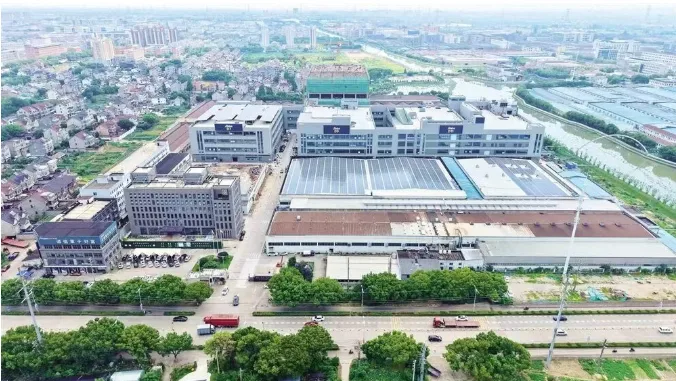
40 Key Projects, 6 Billion Yuan Invested in Half a Year! What Big Moves Is China's Shengze Textile Town Making?
In the first half of the year, Shengze Town's fixed asset investment reached 6.108 billion yuan, with industrial investment growing 13.6%. 40 key projects are accelerating, with industrial renewal and technical renovation investment exceeding 6 billion yuan, driving the textile industry toward high-end, green, and intelligent upgrades, providing global buyers with higher-quality and sustainable textile fabric supply assurance.
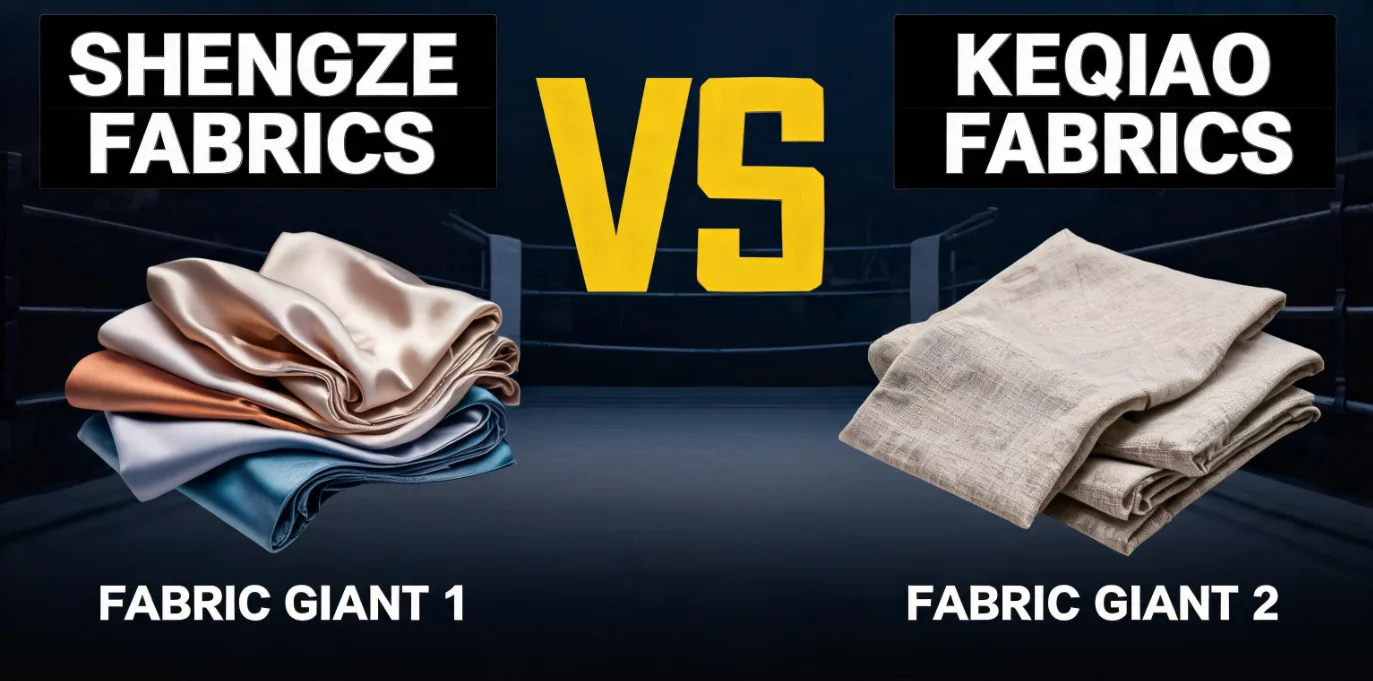
What Are the Advantages of Shengze Fabrics? How to Choose?
What are the advantages of Shengze fabrics? How to choose between Shengze and Keqiao when sourcing? This article helps you determine which orders are better suited for Shengze and which for Keqiao, from perspectives such as stock availability for quick response, category matching, and small order feasibility, helping you reduce inventory, increase reorders, and ensure stable delivery to smooth your business.

Small Orders, Fast Response: A New Strategy in the Fabric Business
Small orders with fast response are becoming an important way to source fabrics. Shengze, with its complete industrial chain from greige fabric, dyeing to finishing, can quickly respond to customers' small-batch needs.