
What Does Yarn Count Mean in Textiles?
Yarn count determines the fineness, thickness, strength, and cost of fabric, but higher is not always better. High-count fabrics are lightweight and soft but delicate; low-count fabrics are thick and durable but rough in texture. When choosing, consider density and GSM together. For daily use, 60S-100S is already top-tier comfort. Understanding yarn count helps you source precisely.
Basic Concept
Yarn count refers to the length of yarn per unit weight (the larger the number, the finer the yarn), directly determining the fabric's fineness, softness, thickness, strength, and cost. The higher the count, the thinner, softer, and more refined the fabric, but also more delicate and prone to damage. It is not that higher is always better.
Key Impact Dimensions
Hand Feel and Appearance
Higher count means finer yarn, resulting in a smoother, more lustrous surface and softer touch. Lower count fabrics feel rough and stiff with visible texture.
Thickness and Weight
At the same density, higher count fabrics are lighter and thinner, while lower count fabrics are thicker and heavier. However, actual thickness also depends on GSM (grams per square meter).
Durability and Strength
Lower count yarns are thicker, offering better tensile strength and abrasion resistance, suitable for high-frequency wear or workwear. Higher count yarns are finer, prone to snagging, pilling, and wear, with a shorter lifespan.
Breathability and Drape
Medium to high count fabrics typically offer good breathability and drape. Very low counts may have loose structure, leading to good breathability but poor shape retention.
Cost and Barrier
High count requires high-quality long-staple cotton and precision processing, significantly increasing cost. Low count uses mature technology and offers high cost-performance.
Common Count Ranges and Applications (Cotton/Blends as Example)
Low Count (≤21S):
Thick yarn, dense and stiff fabric, used for denim, canvas, and coarse woolens. Durable but rough texture.
Medium Count (21S-40S):
Versatile, moderate hand feel, commonly used for everyday T-shirts, basic bedding, and workwear, balancing comfort and durability.
High Count (40S-80S):
Fine, dense, soft yarn with good luster, used for high-end shirts, quality bedding sets, and suits. This is the "sweet spot" for quality and comfort.
Ultra-High Count (≥100S):
Extremely silky and lightweight, but very fragile and hard to care for, mostly used for formal wear and low-frequency high-end garments. Requires high-density weaving to be practical.
Key Misconceptions
Count ≠ Sole Quality Indicator:
Must evaluate together with density (yarn arrangement) and GSM (weight per unit area). A high count with low density results in thin, translucent, and easily damaged fabric.
Higher is Not Always Better:
Excessively high counts beyond raw material and process limits can make fabric fragile and unwearable. For daily use, 60S-100S is usually top-tier comfort with durability.
Unit Distinction:
Commonly marked "S" refers to English count (Ne), which differs from metric count (Nm). Confirm the standard when comparing; in apparel, it usually means English count.
In the textile industry, "1s" means "1 English count," a unit measuring yarn fineness. It uses a "fixed weight" system, specifically:
A fixed weight: take 1 pound (about 454 grams) of yarn. A fixed length: see how long this 1-pound yarn can be spun, using 840 yards (about 768 meters) as the base unit. Conclusion: If 1 pound of yarn has a length of exactly 840 yards, its fineness is 1 count, denoted as 1s.
The relationship between yarn count (S) and yarn fineness is inverse: the larger the number, the longer the yarn for the same weight, thus finer. Conversely, 1s yarn is very thick and rarely seen in practice. Common counts are 21s, 32s, 40s, 60s, etc. The higher the number, the finer the fabric hand feel.
Market practical experience reference: 1S single yarn bare diameter is about 0.9-1.1 mm With outer cotton hair, visually close to 1.1-1.3 mm
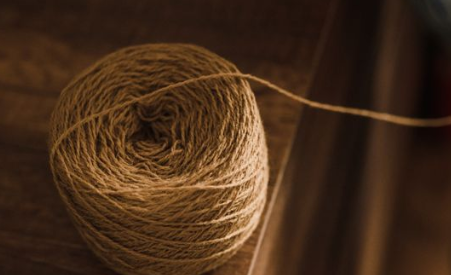
For intuitive comparison: 1S cotton yarn ≈ thickness of ordinary express packaging twine 10S coarse cotton yarn ≈ about 0.3 mm (used for heavy canvas) 21S ≈ 0.2 mm (regular workwear fabric)
Pure cotton single yarn diameter reference (English count Ne, normal twist, excluding hair) Asian thick hair ≈ 0.10 mm, for reference 40S single yarn: diameter ≈ 0.14 mm 60S single yarn: diameter ≈ 0.11 mm 80S single yarn: diameter ≈ 0.09 mm
Nylon staple fiber single yarn diameter reference (Ne English count, normal twist) 40S nylon staple fiber single yarn: ≈ 0.125 mm 60S nylon staple fiber single yarn: ≈ 0.102 mm 80S nylon staple fiber single yarn: ≈ 0.088 mm
Note
Nylon staple fiber yarns (nylon staple blends, pure nylon staple) are labeled 40S/60S/80S; Nylon filament does not use S, but D (denier). There is no such thing as "60S nylon filament" in the market.
Related articles
How to Choose Shengze Fabrics: A Cost and Technical Guide for Purchasing Managers
How to choose Shengze fabrics? This article, from a purchasing manager's perspective, compares Shengze with domestic production areas like Keqiao, Guangdong, and Fujian, as well as overseas supply chains in Vietnam and Turkey, focusing on advantages in chemical fiber woven stock, small-batch quick response, and cost transparency.

40 Key Projects, 6 Billion Yuan Invested in Half a Year! What Big Moves Is China's Shengze Textile Town Making?
In the first half of the year, Shengze Town's fixed asset investment reached 6.108 billion yuan, with industrial investment growing 13.6%. 40 key projects are accelerating, with industrial renewal and technical renovation investment exceeding 6 billion yuan, driving the textile industry toward high-end, green, and intelligent upgrades, providing global buyers with higher-quality and sustainable textile fabric supply assurance.
Understanding Twist in Textiles
Twist is a measure of how tightly a yarn is twisted, directly affecting the hand feel, appearance, and performance of the fabric. Low twist is soft and fluffy, while high twist is stiff and smooth.