
The 15th Jiangsu (Shengze) Textile Expo Concludes Successfully
The 15th Jiangsu (Shengze) Textile Expo has successfully concluded. Wujiang has formed a hundred-billion-level textile cluster, with vortex spinning capacity accounting for a quarter of the global total, and functional fabrics continuously making breakthroughs. For overseas fabric buyers, this expo showcases the complete industrial chain, new products, and supply-demand matching opportunities.
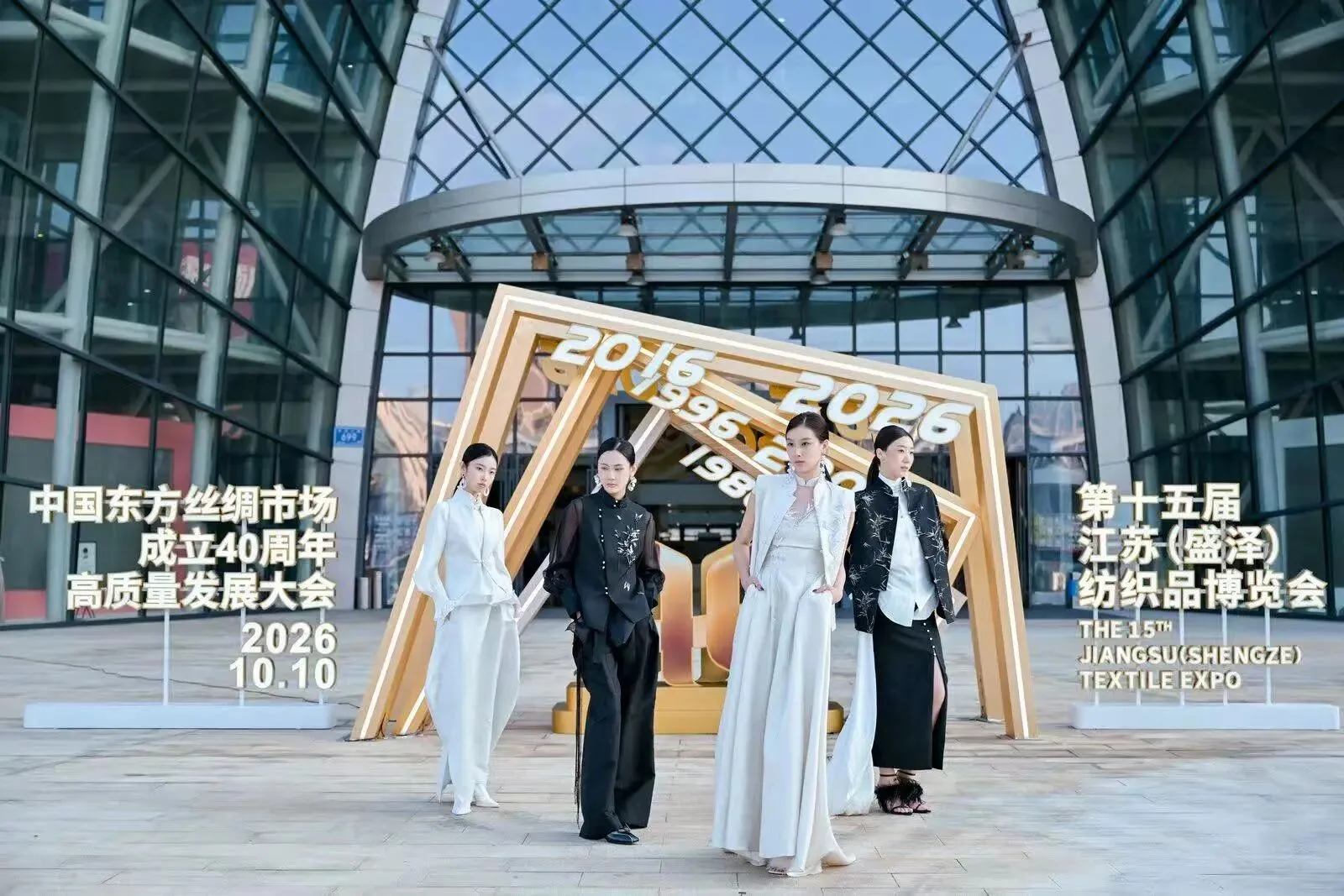
On the evening of October 10, the 15th Jiangsu (Shengze) Textile Expo and the High-Quality Development Conference marking the 40th anniversary of the China Eastern Silk Market opened in Shengze Town, Wujiang District, Suzhou. The expo was held as usual, and the market also just reached its 40th year. This event is both a look back at how Shengze has woven its way through these 40 years and a display of the textile industry's assets as it stands at the starting point of the "15th Five-Year Plan."
Shengze's silk can be traced back to a long-standing silk tradition; the market before us has been gradually transformed over 40 years. When the market was established in 1986, its annual transaction volume was 20 million yuan. Now, the transaction volume of the China Eastern Silk Market has exceeded 200 billion yuan. Wujiang's textile industry has grown from "a single thread" into a hundred-billion-level industrial cluster, selected as a national advanced manufacturing cluster, linking "from a drop of oil to a piece of cloth" into a relatively complete chain. The completeness of the industrial chain and the density of enterprises are among the top in the country.
Sun Daoxun, Secretary of the Wujiang District Party Committee, said that over these 40 years, Shengze's textile industry has been pushing its boundaries outward. Originally mainly weaving, it later expanded into R&D, design, and garment manufacturing, and also entered new materials for medical and aerospace applications. Hundred-billion-level industry, hundred-billion-level market, and hundred-billion-level enterprises are all together. Shengze's vortex spinning capacity accounts for a quarter of the global total. On less than 150 square kilometers of land, two Fortune Global 500 companies have emerged. The market has been established for 40 years, and weaving must continue. Industry cannot be abandoned, innovation cannot stop, and textiles must move toward high-end, digital-intelligent, green, international, and branded development, polishing the "Shengze Weaving" brand.
 Shengze is a place where Jiangnan silk is still alive and is also one of the earliest areas in China's modern textile development. The China Eastern Silk Market started as a street market. Only by daring to take the first step did it squeeze out from the stalls; only by being willing to invest in textiles did it move from clustered trading to later manufacturing.
When the market was first built, it had only two rows of single-story houses and one street. Merchants used concrete slabs as counters, goods were pulled by tricycles, and business was very rough. Over 40 years, the venue has been constantly changing—first houses and streets, then online business was also built, and the market gradually became an indispensable point in the global textile industry.
In the second decade, the private economy rose. Commercial areas such as Xiangsheng, Foreign Trade, and Jingpin were built one after another, expanding the area to 4 million square meters, with over 5,000 merchants. In 2005, the transaction volume ranked first among similar markets nationwide.
In the third decade, the market no longer focused solely on expansion but began to manage quality and standards. In 2007, the "China Shengze Silk and Chemical Fiber Index" was released, the first index in the national silk and chemical fiber industry, and two regional collective trademarks, "Shengze Weaving" and "Silk Capital Dyeing and Finishing," were registered. In 2014, the Shengze International Convention Center was completed, and the first Textile Expo was held. The China Fiber Pavilion and the National Textile Fabric Pavilion also moved in successively. Since 2013, the market's transaction volume has exceeded 100 billion yuan annually.
In the fourth decade, the focus shifted to digital and business formats. Phases I and II of the Oriental Textile City have been put into use, and Phase III is still under construction, with the old market moving toward "upstairs and into the park." The POP Design Platform was introduced, with over 300 designers concentrated here, connecting R&D, design, and ordering in one line. In 2024, the Cross-border E-commerce Industrial Park opened, and in 2025, Shengze Cloud Textile City went online, integrating online and offline operations. Today's market includes display, trading, office, and warehousing. In the past, fabrics were spread out for sale; now, more often, samples are used for negotiation. How professional markets upgrade their venues—here is a presentable example.
The venue is the hard side, and services are the soft side. The market initially only provided stalls, but later added public services covering the entire industrial process, shifting from managing the market to serving the industry.
Around 2004, the market set up four platforms—textile technology, intellectual property, foreign trade consulting, and e-commerce—to address what enterprises lacked. Later, more than ten platforms including foreign language training, legal consulting, CNTAC testing, and designer studios came in, so that R&D, testing, foreign trade, intellectual property, and design could all find people within the market.
The way the market is managed has also changed. Institutional functions were streamlined, approvals were cut, business order was regulated, and work was focused on planning, service, coordination, and management. Logistics routes were unified, prices were clearly marked, and enterprises' shipping costs were reduced. Tax and financial matters are handled in one visit as much as possible. The cross-border service platform connects with external resources, and the market has also received the Ministry of Commerce's National Foreign Trade Transformation and Upgrading Professional Demonstration Base. It is no longer just a place for buying and selling; as enterprises grow and industrial clusters form, many things rely on it for support.
 The industry can become substantial thanks to equipment and products. Over these 40 years, Shengze's textile enterprises have used equipment upgrades to raise quality, moving from having output to improving quality, and then to producing with intelligent equipment.
In 2006, 28 private textile enterprises once again joined forces to replace Shengze's textile equipment as a whole. Precision, quality, and efficiency all improved, showing that these local private enterprises are united and far-sighted. Now, Shengze has more than 1,000 vortex spinning machines, with capacity accounting for a quarter of the global total. With equipment upgraded, products have also become stronger. Zijinghua Textile has produced a 58 gsm ultra-light hardshell fabric that can withstand rainstorm-level conditions while maintaining good breathability. Hanta Textile's 7-micron functional film can withstand 20,000 mm water pressure, independently developed and then sold back overseas. Tutai Ke's fluorine-free waterproof membrane material fills a domestic gap. Taitan Yarn's strength is 15 times that of steel. Functional fabrics such as cooling, antibacterial, and temperature-control ones are emerging in batches; some technologies previously held abroad can now be made domestically, and some are already ahead.
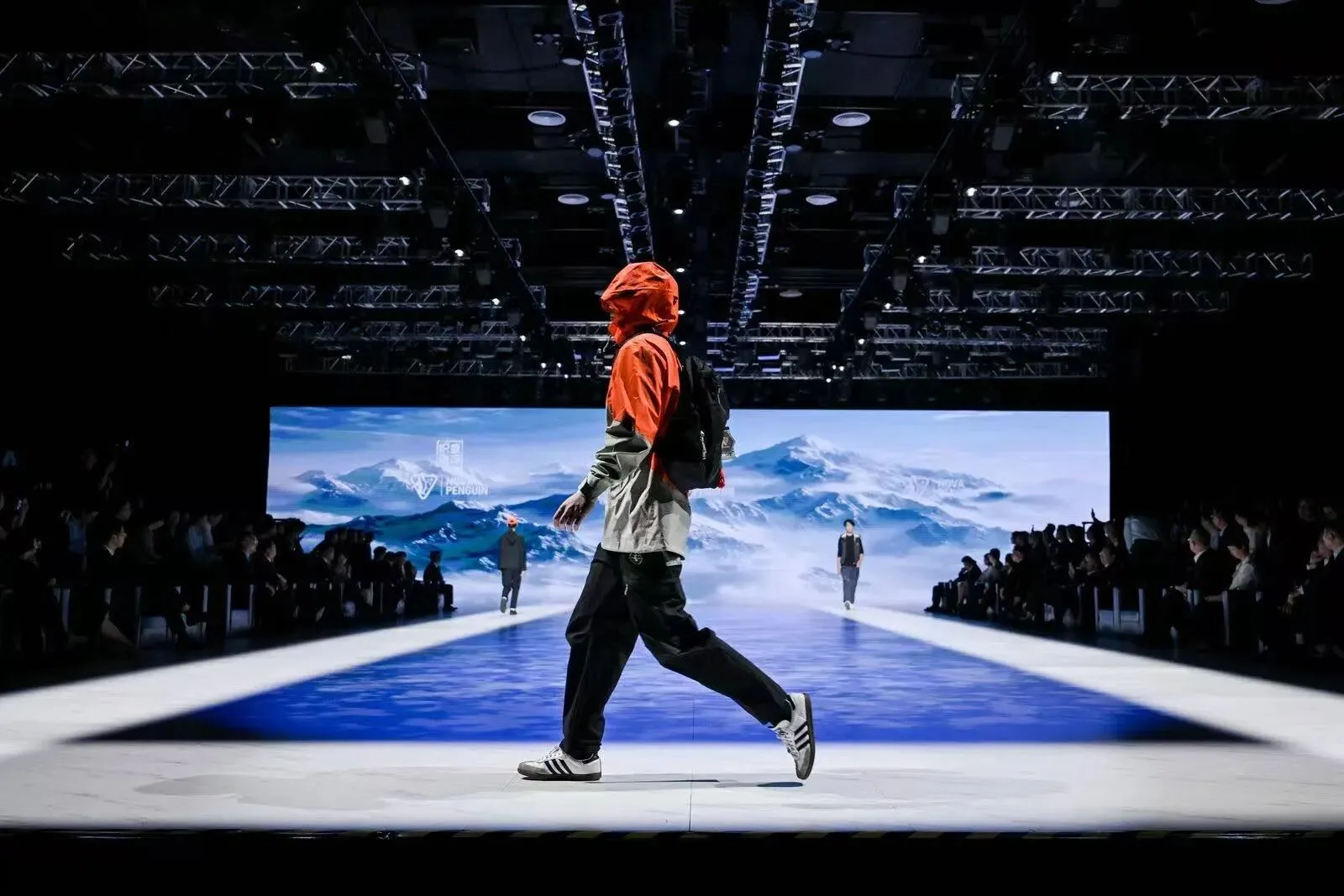
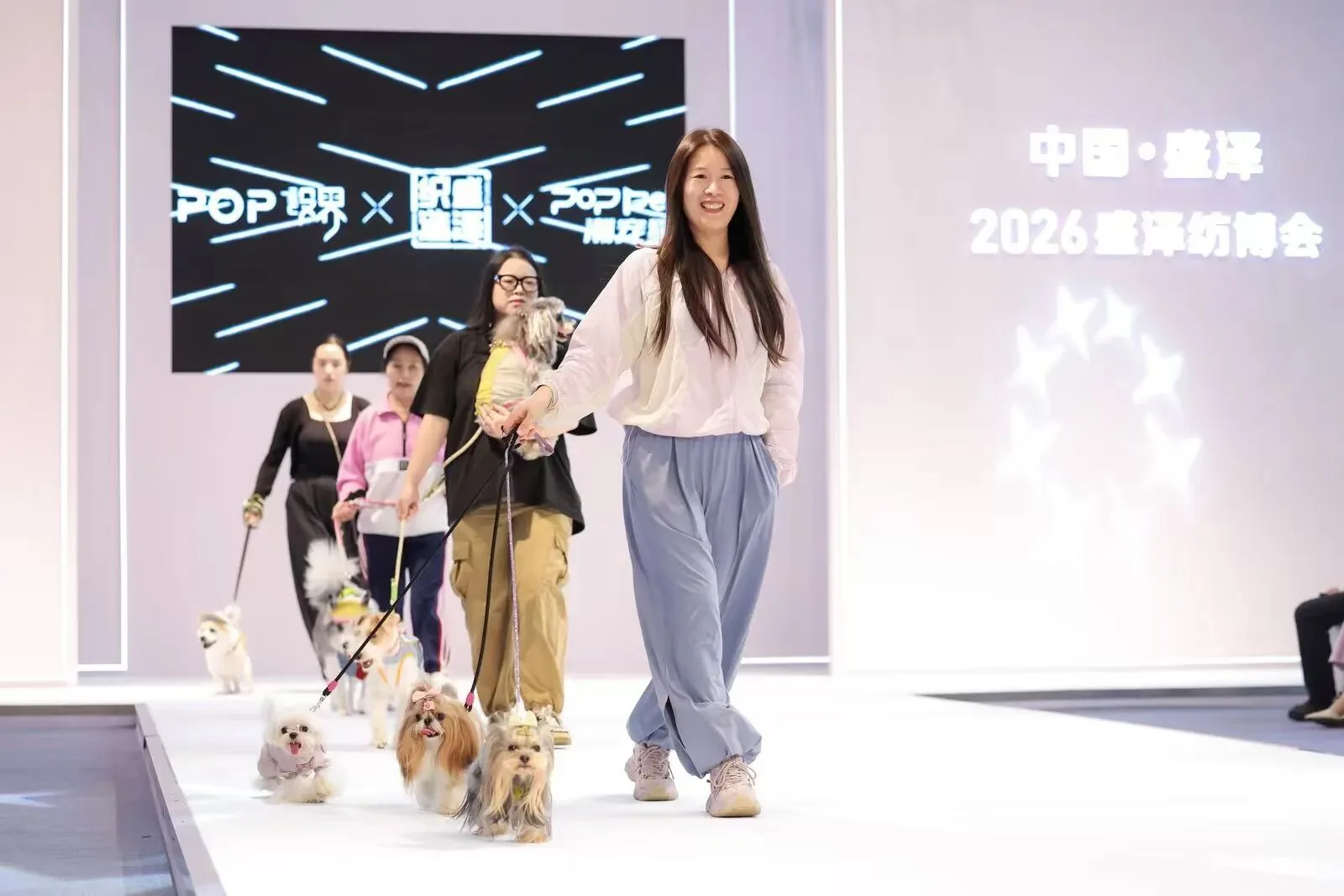
This year's Textile Expo unfolds the industrial chain through "shows, exhibitions, conferences, and business." From October 10 to 13, nearly 20,000 square meters of exhibition area will host 300 enterprises, with an online cloud expo running simultaneously. The "Fabric Initiates New Life" new product exhibition area, the specialized and innovative space, and the sustainable fashion release area are placed together. The opening ceremony features a new product show, and there are multiple small runway shows on site, covering outdoor, women's wear, and high-end customization. In parallel, there is the Advanced Fiber Materials Innovation Conference and the Industrial Chain Supply-Demand Matching Order Fair. Enterprises not only display products but also begin to provide solutions by scenario, negotiating with global procurement.
Over 40 years, the market has grown from 20 million yuan to 200 billion yuan. This is a path that Shengze's textile people have carved out by sticking to industry and relying on innovation, and it also shows how China's traditional textile industry has transformed in recent years. At the beginning of the "15th Five-Year Plan," Shengze must continue weaving. By safeguarding what it has and creating new things, "Shengze Weaving" will stand firm.
Related articles
What Does Yarn Count Mean in Textiles?
Yarn count determines the fineness, thickness, strength, and cost of fabric, but higher is not always better. High-count fabrics are lightweight and soft but delicate; low-count fabrics are thick and durable but rough in texture. When choosing, consider density and GSM together. For daily use, 60S-100S is already top-tier comfort. Understanding yarn count helps you source precisely.
Understanding Twist in Textiles
Twist is a measure of how tightly a yarn is twisted, directly affecting the hand feel, appearance, and performance of the fabric. Low twist is soft and fluffy, while high twist is stiff and smooth.

Small Orders, Fast Response: A New Strategy in the Fabric Business
Small orders with fast response are becoming an important way to source fabrics. Shengze, with its complete industrial chain from greige fabric, dyeing to finishing, can quickly respond to customers' small-batch needs.